How an Automatic Watch Works (In Plain English)
Mainspring, rotor, escapement, balance wheel — here's how a self-winding automatic watch actually keeps time, explained simply for beginners.
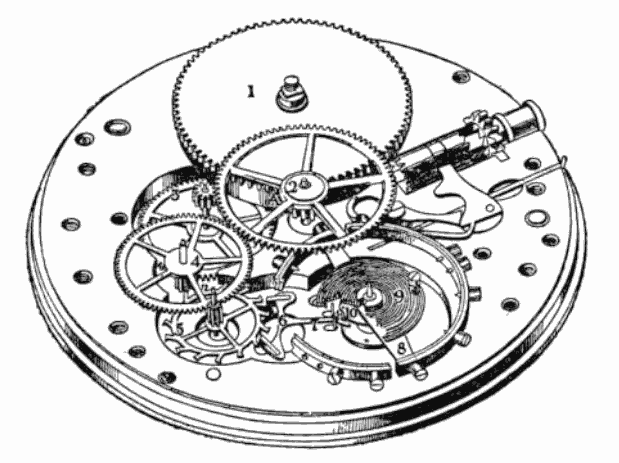
An automatic watch is a tiny mechanical machine that runs on nothing but the motion of your wrist. No battery, no electronics — just clever engineering refined over centuries. Here’s how it actually works.
The power source: the mainspring
At the heart of the watch is a coiled spring called the mainspring. Winding it stores energy. As it slowly unwinds, it releases that energy to drive everything else. A fully wound watch typically stores 40–70+ hours of running time — its “power reserve.”
The self-winding part: the rotor
What makes it automatic is the rotor — a weighted semicircle that swings as your wrist moves, winding the mainspring for you. Wear it daily and it stays wound; let it sit and it eventually stops.
The regulator: escapement and balance wheel
Energy can’t just dump out all at once, or the watch would unwind in seconds. The escapement releases it in tiny, even steps, and the balance wheel swings back and forth at a steady rate (often 6 or 8 beats per second) — that’s the ticking you hear. This is what keeps time.
From gears to hands
A train of gears divides that steady motion down into seconds, minutes and hours, turning the hands at exactly the right speed. The whole system is a chain: stored power → metered release → steady oscillation → accurate hands.
Why automatics aren’t perfectly accurate
Because timing depends on a physical spring and wheel, temperature, position and wear all nudge accuracy. A few seconds a day is normal and expected — the trade-off for a watch with genuine mechanical soul.
The bottom line
An automatic watch turns the swing of your wrist into precisely metered time, entirely mechanically. Once you understand the mainspring-rotor-escapement chain, that sweeping seconds hand becomes a lot more magical.