Seiko Astron Explained: The GPS Solar Watch That Sets Itself
The Seiko Astron uses GPS and solar power to set the perfect time anywhere on Earth, no buttons required. Here's how it works and who it's for.
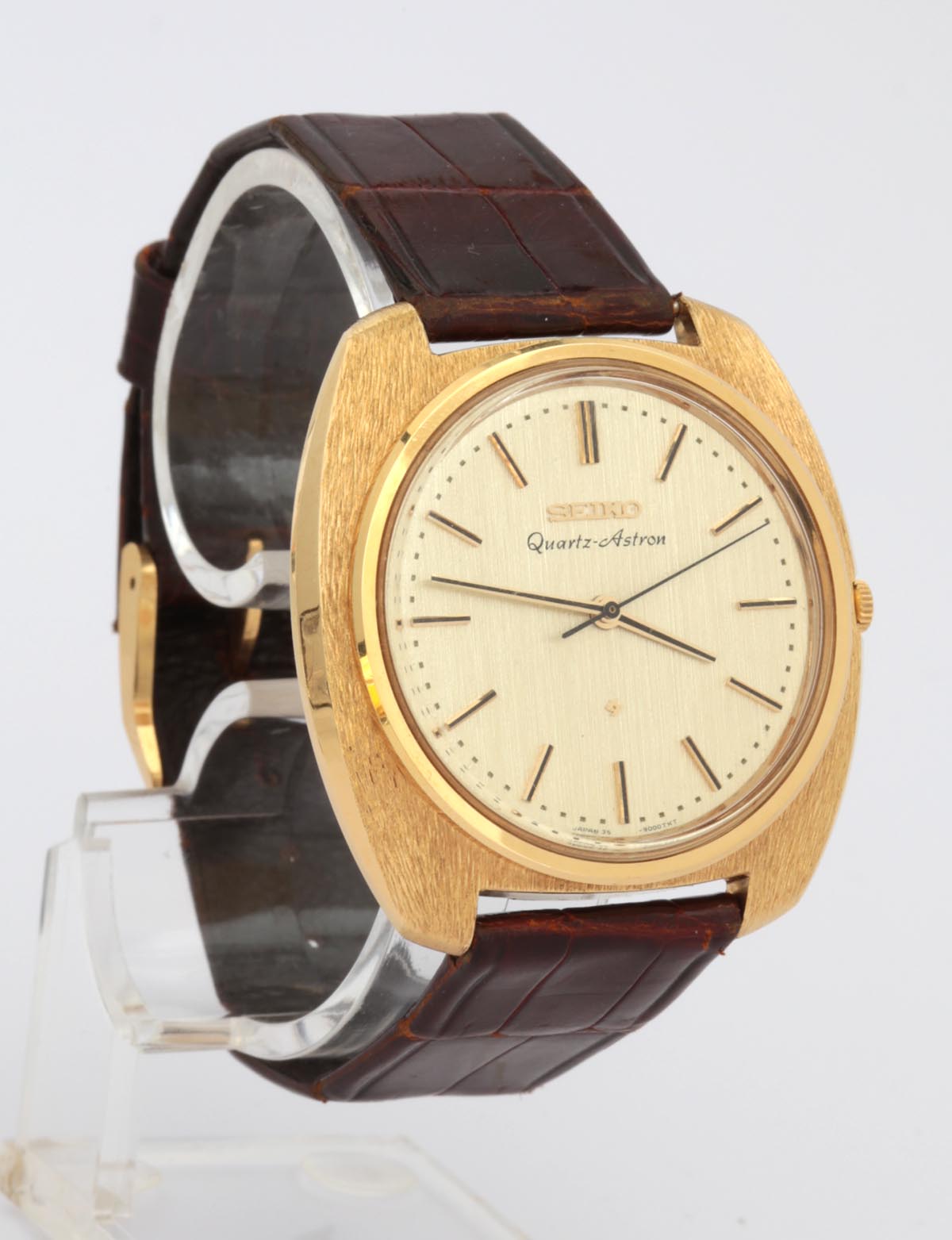
The name Astron is historic: Seiko’s 1969 Astron was the world’s first quartz wristwatch, a watch that changed the industry forever. The modern Astron carries that pioneering spirit with a different trick — GPS timekeeping.
How GPS timekeeping works
A modern Seiko Astron connects to GPS satellites to determine your exact position and time zone, then sets itself to the correct local time — automatically. Land in a new country, and the watch knows where it is and adjusts. No bezels, no manual zone-setting.
Powered by light
Like the rest of Seiko’s solar range, the Astron is solar powered, so the GPS hardware never needs a battery change. It charges from light and tops up the cell that drives both the movement and the satellite syncing.
Why it matters
- Frequent travelers get the right time, instantly, anywhere with a clear sky.
- Accuracy is effectively atomic-clock perfect, since it references satellite time.
- No maintenance beyond keeping it in the light.
What to consider
Astrons are larger, more technical watches with a price to match — this is premium Seiko, not budget territory. The GPS sync needs a view of the sky (it won’t lock indoors deep in a building), and the high-tech aesthetic won’t suit someone after a vintage look.
The bottom line
The Seiko Astron is a fitting heir to the watch that started the quartz era: a genuinely clever travel companion that sets itself anywhere on the planet and never needs a battery. For the globe-trotter who wants zero fuss and perfect time, it’s one of a kind.


